Looking for the right corporate event company in Singapore? It’s not just about who charges the least. It comes down to finding a team that really gets what you need and has done it before. The right organiser will guide you through the whole process, help with suppliers, map out the programme, and step in when things go sideways.
So, Where Do You Start?
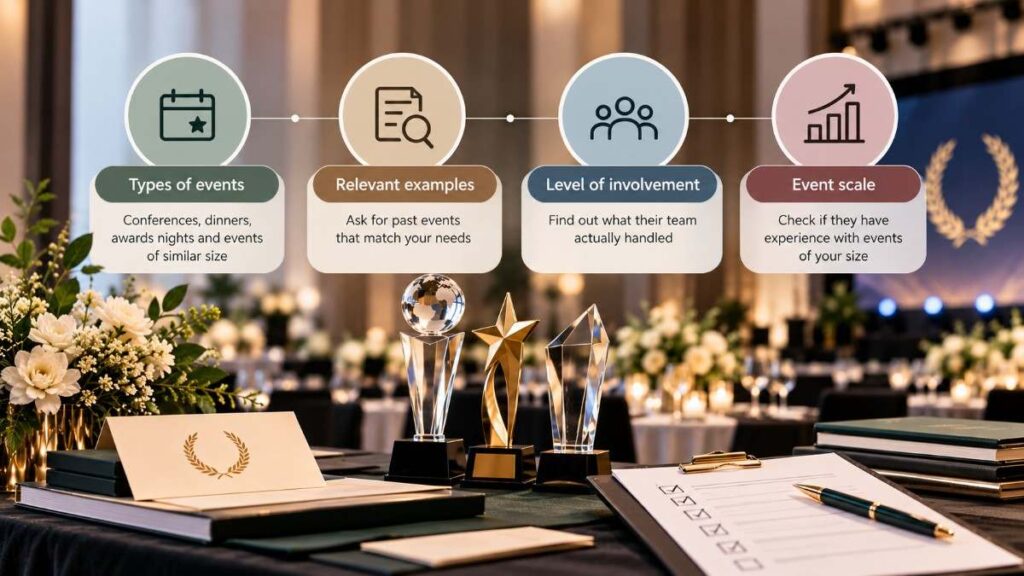
First, check their experience. Companies that have been around for a while tend to know the requirements. They’ve handled different venues and dealt with all sorts of challenges.
Years of Experience
Ask them how long they’ve been running, get details about their recent events, and see if their clients match your industry or audience.
Certifications and Accreditation
Certification is another important thing. That stamp of approval means they follow recognised safety and information management standards. Look out for things like BizSafe, ISO 27001, and ISO 27701. These demonstrate their commitment to safety and data privacy. Make sure these certificates are up-to-date and actually relevant to your event.
Event Portfolio
Don’t just skim their portfolio. Ask for events that are similar to yours in size, guest profile, and style. When you’re going for special event planning, you want a team that really listens and adjusts their process to fit what you need. No two events are the same, so you need someone who actually listens to what you want, not just follows some cookie-cutter plan.
Frequent Repeat Clients
Repeat clients say a lot about their reliability and service. Local venue knowledge is a plus, too. It helps with layouts, supplier coordination, and making sure everything runs smoothly.
When you’re evaluating the best corporate event planners, ask them about their experience with local venues and how they manage last-minute plans, like if a supplier is late or something breaks down.
Why Certifications Matter
Big corporate events aren’t just about shiny decorations. You’ve got guests, expensive equipment, suppliers, and sometimes sensitive info on the line. If your organiser doesn’t have solid safety and data management systems, you’re risking more than an awkward meal.
What Is BizSafe, ISO 27001, and ISO 27701?
Singapore’s BizSafe programme helps companies spot risks before anything goes wrong. ISO 27001 handles information security, making sure your guest lists and event details stay safe from leaks or misuse. ISO 27701 takes care of privacy, which is essential when you’re dealing with attendee data.
How to Assess an Event Company’s Experience
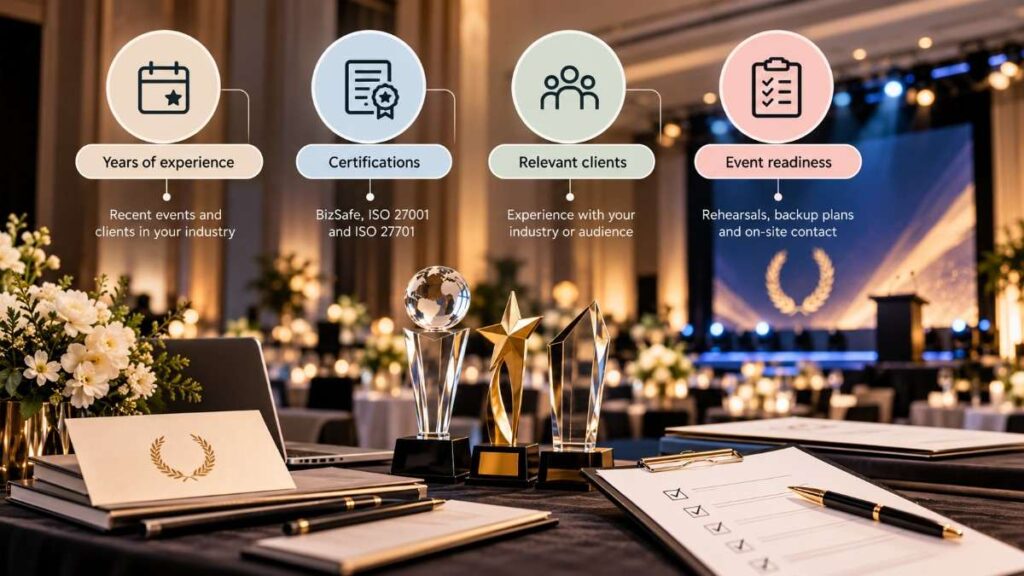
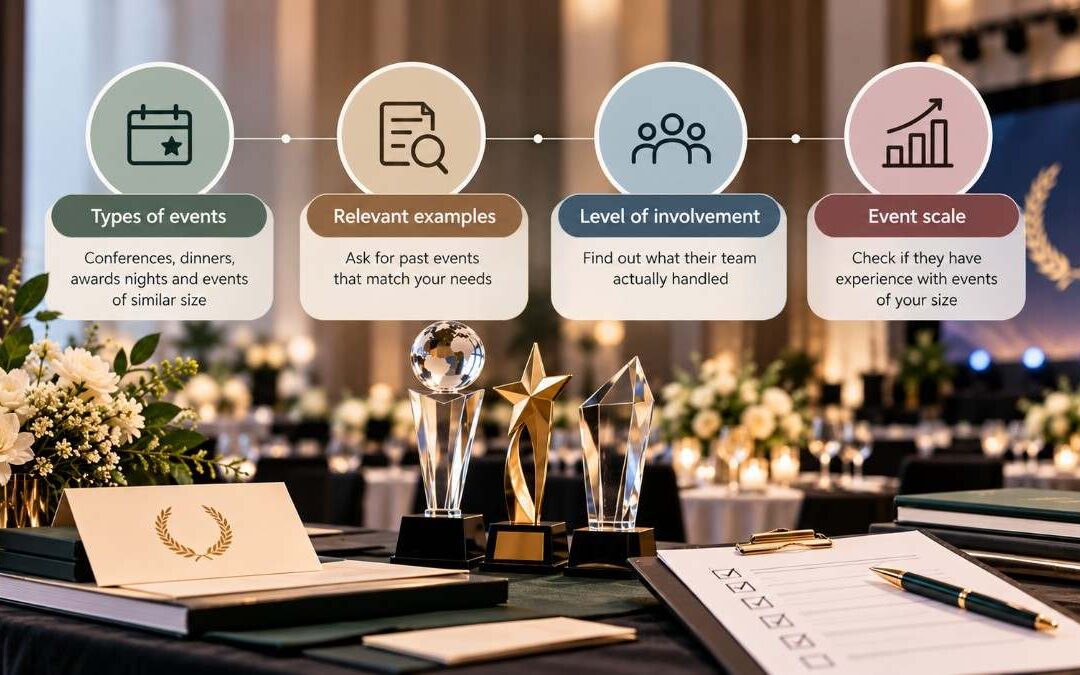
Just because a company shows off a bunch of completed projects doesn’t mean they can handle yours. Dig deeper. Have they managed conferences, dinners, awards nights, and events of the size you’re planning? Ask for examples and how involved they were.
Understand the Planning Process
Size matters. Managing a small team-building event is very different from running a big gala. Find out if they’ve handled your guest count and what problems they solved.
Repeat clients? That’s a great sign. Ask how they keep communication flowing and what their planning process looks like. A real pro will walk you through timelines, supplier coordination, programme planning, and support on the day itself.
Types of Corporate Events to Consider
No two corporate events are really the same. Staff parties? They’re for loosening up, getting people to mingle, and just having a good time. Conferences, on the other hand, are driven by solid schedules and tech that actually works when you need it.
Dinner & Dance and Gala Dinners
Dinner & Dance nights are all about celebrating the team, usually with some wild themes, good music, and maybe even an award or two. Gala dinners bring the formality up a notch. Picture VIPs, grateful sponsors, polished agendas, and everything running smoothly down to the minute.
Awards Events and Conferences
Then you’ve got awards nights, which are kind of a logistical puzzle. Someone has to keep track of every category, who’s winning what, the exact order, and who’s up next. Plus, you can’t have a glitchy mic or awkward silences. Stage managers and AV support are key.
Conferences are packed with keynote speakers, panel discussions, breakout rooms, and plenty of chances to network. A good organiser keeps the show moving: making sure everyone’s on schedule, handling registrations, and coordinating with the venue staff.
Virtual and Special Events
If you’re running things online, you’ll want virtual tools that don’t let you down. Businesses may also need special event planning for company milestones, product launches or customised corporate occasions.
Comparing Event Companies
Start by checking their portfolio and getting a quote. This helps you pick out teams that match your style and your budget.
What to Check
| What to Check | Questions to Ask |
| Event experience | Have you run events like ours before? How big were they? What kind of format? |
| Project team | Who’s my main contact if I hire you? Who’s running the show? |
| Budget | What’s included in your price? Anything extra I should expect? |
| Suppliers | Which services do you handle yourself, and which ones do you outsource? |
| Contingency plans | How do you deal with unexpected hiccups, like delays or tech hang-ups? |
| Past clients | Can you show me case studies or share references from similar events? |
Best corporate event planners lay it all out for you in a clear proposal: services, costs, schedule, and who’s taking care of what. Compare different quotes based on the same requirements. Don’t just hunt for the lowest price. That cheaper option sometimes leaves out things like rehearsals, tech support, or event-day coordination.
Consider Event-Day Support
Ask who’ll be on-site to tackle problems. Having one clear contact person makes solving issues faster.
Review the Contract
Check how and when you pay, what happens if you need to cancel, exactly what’s included, and whether there are hidden costs.
What Clients Say
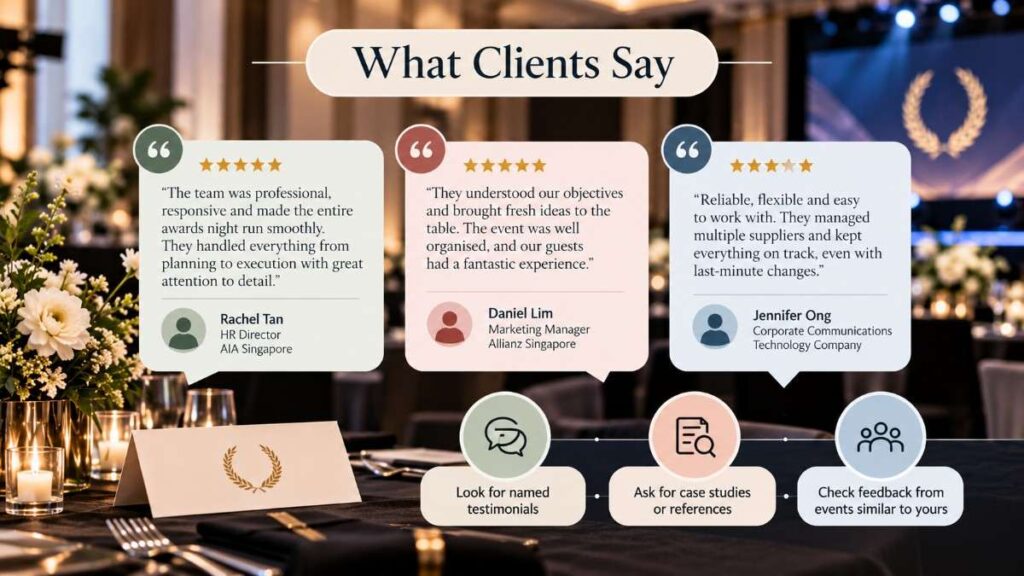
Client feedback tells you a lot about how an event organiser communicates and manages their projects. Look for testimonials with names and details about the work done. Ask for case studies or references from events like yours.
Frequently Asked Questions
1. What should I look for in a corporate event company in Singapore?
Check their experience, certifications, portfolio, pricing, and event-day support.
2. How long has this event company been around?
Check their history and ask to see recent projects.
3. Why do certifications matter?
They show the company knows best practices in safety, information security, and managing privacy.
4. What kinds of corporate events can an organiser handle?
Anything from Dinner & Dance parties, gala dinners, awards, conferences, virtual events, to special gatherings.
5. Can a company manage both big and small events?
Many can. Tell them your guest count and what you need, and see if they’re equipped.
6. When should I book?
For most corporate events, booking three to six months in advance works. If it’s bigger or trickier, give yourself more time.
Choosing a special event planner isn’t just about price. Look at their experience, credentials, and how they plan to handle your needs. The best planners clearly walk you through the process and show proposals that really fit your budget. If you want, Tembusu Events can help you talk through your plans, budget, and event format.
Recent Comments